Good morning. Guess who's back? (Again.) Some happy news to explain the six-month silence: I’m a dad now! Anyways, we have a lot to catch up on, so I’ve linked quite a few stories below. Also… I brought back the OG email design, oil & gas prices, the molecule of the day, and memes. Oh and you can now read the entire 6-year archive here.
| WTI Crude | $96.41/bbl | -9.9% |
| Brent Crude | $114.89/bbl | -12.2% |
| HH Nat Gas | $2.90/MMBtu | -2.4% |
| MB Propane | $0.86/gal | -1.3% |
| 3:2:1 Crack | $70.18/bbl | +9.2% |
Throwing in the towel on PBS
Mitsubishi Chemical is exiting the polybutylene succinate (PBS) business it ran through PTT MCC Biochem, its 50/50 joint venture with PTT Global Chemical in Rayong, Thailand.
Wait, what's PBS?
PBS is a biodegradable polyester made from succinic acid and 1,4-butanediol (BDO), used in things like coatings for paper cups and coffee capsules. Mitsubishi and PTT built a 20 KTA plant to make it from bio-based succinic acid, and it started up in 2017.
So, what happened?
The market never developed the way the partners expected, and Mitsubishi says the business never made much money. The plant stopped running in December 2025, and once its inventory is sold, it'll be dismantled and the joint venture dissolved. It's the latest in a long line of Mitsubishi shedding businesses.
How it's going at Avantium
Avantium just finished commissioning the last major unit of its 5 KTA FDCA plant in Delfzijl, the Netherlands, and is about to make its first FDCA.
Catching you up:
Avantium spun out of Shell in 2000, developed a process to make FDCA from sugar, and teamed up with BASF in 2016 on a 50 KTA plant in Antwerp. It IPO'd in 2017, but BASF backed out in 2019 over the plant's timeline. So Avantium committed to a 5 KTA plant on its own and started licensing its process to Origin Materials, which later dropped FDCA to focus on PET caps and is now liquidating. The plant was finished in October 2024, but start-up has dragged, and first shipments are now expected at the end of 2026.
So, what now?
Money is tight. Avantium had €23.9 million in cash at the end of June and plans to raise at least another €55 million, and it's been shedding what it can to get the plant running: its glycol IP went to UPM, and its CO2 business was spun out as Carbeau. This plant looks like Avantium's final bet.
The US finally gets a new sunscreen molecule
The FDA added bemotrizinol (BEMT) to its list of approved sunscreen ingredients, the first new UV filter allowed in US sunscreens in a couple of decades, and it'll be in stores soon.
Why did it take so long?
BEMT has been stuck in the FDA's process since the early 2000s, even though Europe and Asia have used it for decades. We covered why back in December 2021: the US regulates sunscreen as a drug, not a cosmetic, so whoever makes the ingredient has to pay for drug-style trials without drug-style margins.
Enter BASF:
DSM-Firmenich sponsored the FDA request, which normally earns the sponsor 18 months of exclusive sales. Instead of keeping that to itself, it licensed BASF to sell BEMT in the US alongside it, and BASF launched its own two months after the approval. DSM-Firmenich's application leaned partly on BASF's old safety data (BASF bought Ciba, which invented the molecule), and DSM-Firmenich told BeautyMatter the license was the fastest way to get BEMT to market.
The Reboiler:
- IOL Chemicals and Pharmaceuticals is adding a 6 KTA ibuprofen unit at Barnala, India, taking capacity to 18 KTA.
- Praj and Gevo signed a deal giving Praj exclusive rights to commercialize Gevo's bio-isobutanol technology in India.
- Century Lithium is planning a 300 ton-per-day chlor-alkali plant in Nevada or Utah to supply its Angel Island lithium project.
- Ineos is mothballing its three acetyls plants in Hull, UK, Europe's last, putting almost 4,000 jobs at risk.
- R3 Lithium bought and is restarting bankrupt Ascend Elements' lithium recycling plant in Covington, Georgia, backed by a $15M Series A.
- Yara opened Europe's largest carbon capture plant at its Sluiskil ammonia site in the Netherlands, capturing up to 800 KTA of CO2 for storage under the Norwegian seabed.
- HS Hyosung and Umicore's JV is investing 1.2 trillion won (about $860M) in a 20 KTA silicon anode plant in Ulsan, South Korea.
- Olin and Huntsman's merger cleared the U.S. antitrust (HSR) waiting period.
- TotalEnergies bought Plastic Energy's 35% stake in its 15 KTA Grandpuits plastics recycling plant in France, taking full ownership.
- Hindalco started up India's first 30 KTA superfine precipitated aluminum trihydrate plant in Belagavi, Karnataka.
- Holiferm and Organica are combining into one UK business that makes biosurfactants and the cleaning products that use them.
- Shell, Schneider Electric and Axens installed Europe's first industrial-scale electric tubular heater at Shell's Rheinland site in Germany.
- CovationBio started commercial production of bio-based THF and PTMEG at its new 50 KTA plant in Qidong, China.
- Toyobo is buying out Indorama's 50% stake in their Thai airbag yarn JV, Toyobo Indorama Advanced Fibers.
- Lotte Chemical shut down its 1,100 KTA Daesan naphtha cracker in South Korea indefinitely.
- Perstorp is shutting down its polyols plant in Toledo, Ohio.
- Methanex is idling its New Zealand methanol plants indefinitely from early 2027 and selling its gas rights, citing declining gas supply.
- Symrise sold its ~$200M-revenue AmeriTerpenes terpene business to private equity firm Mutares.
- Sumitomo Chemical started mass production of 4-inch indium phosphide epitaxial wafers for AI data centers in Japan.
- Tokuyama opened a $60M semiconductor-grade polysilicon plant in Ho Chi Minh City, Vietnam.
- Atlantic Alumina raised another $350M from the Department of War and private investors, bringing its Gramercy, Louisiana refinery restart funding to $800M.
- CHS and OCP are planning a $450M, 1,000+ KTA phosphate fertilizer plant in Louisiana, the first new one in the U.S. since 1984.
- Asahi Kasei opened a new wet-process Li-ion battery separator coating line in Charlotte, North Carolina.
- Egypt broke ground on a $658M, 250 KTA phosphoric acid complex at Abu Tartour.
- X-energy and Dow are getting up to another $1B from the U.S. DOE for their Seadrift, Texas nuclear project, bringing federal support to $2.15B.
- Again acquired industrial biotech firm Genomatica.
- AkzoNobel and Axalta shareholders approved the two companies' all-share merger.
- SABIC sold its Americas and Europe engineering thermoplastics business, eight plants in all, to Mutares for $450M.
- Lallemand and Braskem launched a way for corn ethanol plants to coproduce bio-acetone using a new yeast strain.
- PetroChina's Dushanzi Petrochemical started up a 1,200 KTA ethylene plant in Xinjiang, taking its capacity there to 3,000 KTA.
- Honeywell closed its £1.3B purchase of Johnson Matthey's catalyst technologies business.
- DuPont launched a direct lithium extraction lineup of more than 20 products for lithium brines.
- Evonik started making its own methyl mercaptan feedstock for DL-methionine at its Mobile, Alabama site.
- Alzchem is going to build a $150M nitroguanidine plant in Bushy Park, South Carolina, to supply the U.S. government, with startup planned for 2029.
- Covestro bought two former Vencorex HDI derivatives plants in Rayong, Thailand, and Freeport, Texas.
- Bayer moved its U.S. glyphosate business into a separate unit called Ruveon.
- NextChem closed its €148M purchase of process-technology firm Ballestra Group.
- Dow is spending $100M by 2027 to expand specialty silicones capacity in the U.S., China and Japan.
- Arkema started up a $20M expansion in Calvert City, Kentucky that raises its North American PVDF capacity by 15%.
- Ineos Styrolution is closing its 400 KTA polystyrene plant in Channahon, Illinois.
- The Pentagon offered $1.2B in conditional loans to Phoenix Tailings and Energy Fuels for rare earth processing plants.
- Wacker opened a new specialty silicones plant in Karlovy Vary, its second site in Czechia.
- COIM USA is investing $50M in a renewable polyols plant near Texarkana, Texas.
- LyondellBasell plans to shut its last polypropylene unit in Brindisi, Italy, a 260 KTA line, by the end of 2026.
- Eastman bought Arkema's Jarylec dielectric fluids brand.
- Air Liquide started up a Cryocap CO2-capture pilot for cement at Holcim's CaptureLab in France.
- Freepoint Eco-Systems suspended operations at its plastics pyrolysis plant in Hebron, Ohio, after five Ohio EPA violation notices.
- BASF is closing its expandable polystyrene plant in Ulsan, South Korea.
- Röhm hit full-scale production at its new 250 KTA MMA plant in Bay City, Texas.
- Ingredion is buying Tate & Lyle for £3.7B, expecting $130M in cost savings by 2030.
- Metso launched a single-pass process that turns spodumene concentrate into battery-grade lithium carbonate.
- Hyosung TNC started supplying bio-BDO from its new $1B, 50 KTA plant in Ho Chi Minh City, Vietnam, using Geno's fermentation tech.
- Trillium raised $13M to run its bio-based acrylonitrile demo plant at INEOS Nitriles' Green Lake site.
- Loop Chemicals licensed Sandia National Laboratories' chemical looping ammonia tech for small-scale, distributed production.
- Nextchem won the licensing and design contract for AdvanSix's 700 short-ton-per-day urea-to-DEF plant in Hopewell, Virginia.
- SaltX and Holcim made Portland-quality cement clinker with a fully electrified process.
- Ineos Acetyls and Sandpiper Chemicals are planning a $1.7B, 1,100 KTA low-carbon methanol plant in Texas City, Texas.
MOTD: aniline
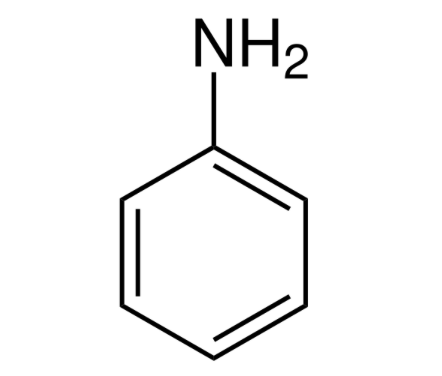
You probably know aniline most intimately from a commonly performed lab in organic chemistry using azo dyes. While only about 2% of the aniline produced today is used to make dyes and pigments, the molecule was first produced industrially for exactly that. Its legacy can be found in the name of the world's largest chemical producer—BASF (originally called Badische Anilin- und Soda-Fabrik).
The world produces some 8 million tonnes of aniline each year by nitrating benzene to nitrobenzene and then hydrogenating it. The vast majority (about three-quarters) of the molecule is used to produce MDI (which is used to make mostly rigid polyurethane foam) and the rest becomes rubber processing chemicals, herbicides, pharmaceuticals and those dyes mentioned earlier.
The aniline market is fairly consolidated, since most of it is made by the same few companies that make MDI, for their own use. They're led by Wanhua, BASF, and Covestro.