Good morning. Today: Verbio starts turning some of its biodiesel into chemicals, a Texas startup breaks ground on iron pure enough for magnets, and Sika buys the UK's favorite patio grout. See you next Friday!
| WTI Crude | $101.91/bbl | +7.3% |
| Brent Crude | $126.55/bbl | +0.4% |
| HH Nat Gas | $3.22/MMBtu | +1.9% |
| MB Propane | $1.07/gal | +14.0% |
| 3:2:1 Crack | $49.40/bbl | -9.7% |
Verbio's call option on decene
German biofuels producer Verbio just commissioned a $110 million plant in Bitterfeld, Germany, that turns some of its canola biodiesel into 17 KTA of 1-decene and 32 KTA of 9-DAME (which will be sold to lubricant, detergent and plastics makers).
Feeling déjà vu?
The plant runs ethenolysis, reacting the biodiesel with ethylene to split its oleic acid esters at the double bond into 1-decene, mostly used to make PAO synthetic lubricants, and methyl 9-decenoate (9-DAME), which has no established market yet. Elevance tried something similar a decade ago with butene, which gives a broader mix of esters and olefins. But Elevance was a chemicals startup that needed the chemicals to pay, and it didn't work out.
So, what's the deal here?
Every pound of biodiesel that goes through this plant is a pound Verbio could have sold as fuel. And customers have to qualify those new molecules before they buy at scale, which takes time. But Verbio doesn't have to run the plant while they do: because it's a biodiesel company first, the plant is effectively an option on the spread between decene and biodiesel, not a bet on cheap diesel and rapid market development.
Hertha's special iron for special magnets
Hertha Metals broke ground on a $100 million plant in Conroe, Texas, that will make about 10 KTA of high-purity iron, some of it pure enough for rare-earth magnets.
What's different about it?
Blast furnaces and DRI plants (we covered DRI back in 2022) strip the oxygen from iron ore while it's solid. Hertha melts the ore in an electric arc furnace, reduces the molten iron oxide with natural gas (methane) or hydrogen, and adds carbon, all in one furnace. Its 0.3 KTA pilot next door reached 99.95% iron, the purity magnet makers ask for. Magnet-grade iron is due in early 2028, but the plant is really a proving ground for a 500 KTA steel mill. The 25% cost advantage over blast furnaces it promises is Hertha's own number.
Why magnets?
NdFeB magnets, used in EV motors and wind turbines, are about 70% iron, and Hertha estimates China makes 94% of the iron pure enough for them. So the Pentagon put $65 million of equity into Hertha's $134 million Series A, the latest of the stakes the government has been taking in its supply chains. It's a different bet on the same China problem as Niron Magnetics, which is building a Minnesota plant for rare-earth-free magnets made from iron nitride.
Sika's polymeric sand acquisition
Sika acquired Azpects, an Ipswich, UK maker of jointing compound, the stuff swept into the gaps between patio slabs, for an undisclosed price.
First, let's zoom out:
Construction chemicals are the small, pricier layer on top of bulk materials like cement and concrete: admixtures, sealants, adhesives, grouts. Sika is the biggest player, with 12% of a market it puts at about $133 billion, and grouts and tile adhesives sit in its biggest line, Building Finishing, about a fifth of sales. Jointing compound is grout for patios: Azpects' EASYJoint is quartz sand coated in polybutadiene and plant oils, which harden by reacting with oxygen in the air. Ready-made compounds like this are replacing sand and cement mixed on site, and that shift is the growth Sika is betting on.
Why the acquisition?
Sika has been in this for a while but hasn't quite found its footing. Its UK unit Everbuild sold a jointing compound under the Geo-Fix brand until another distributor took the rights in 2024, and Sika now sells its own FastFix; in Canada it bought Sable Marco, a polymeric sand maker, in 2022. Why none of that stuck isn't clear. Azpects is the incumbent: builders' merchant MKM calls EASYJoint the UK's top-selling jointing compound, and it looks like the business does about $24 million a year at a gross margin of 40% or so.
The Reboiler:
- Adperma opened a ~$630M, 345 KTA phenol plant in Haldia, India.
- Symrise is adding macrocyclic musk production in India.
- MOL opened its first biomethane plant, a ~5 KTA unit in Hungary.
- Tosoh is buying Asahi Kasei's half of their Japanese HDI joint venture.
- Solstice is spending $49M on an R&D hub in Buffalo, New York.
- Fujifilm is spending $18M to make more CMP slurries in Mesa, Arizona.
- SLB opened a drilling fluids plant in Pemba, Mozambique.
- STX bought its first cargo of e-methane from TURN2X's plant in Spain.
- Monument Chemical is taking over Minasolve's US supply of THFA and 2-MeTHF.
- Veolia finished a $58M wastewater plant in Plainsboro, New Jersey.
- Metacon won EU funding for a biomethane-to-hydrogen pilot on Crete.
- Imerys rolled out a lower-carbon grade of its biomass-based synthetic graphite.
- Technip Energies will build new lube base oil units at HPCL's Mumbai refinery.
- PPG is spending $70M to expand its aircraft windows plant in Huntsville, Alabama.
- Monomoy Capital invested in oilfield chemicals blender Creedence Energy Services.
MOTD: ethylene
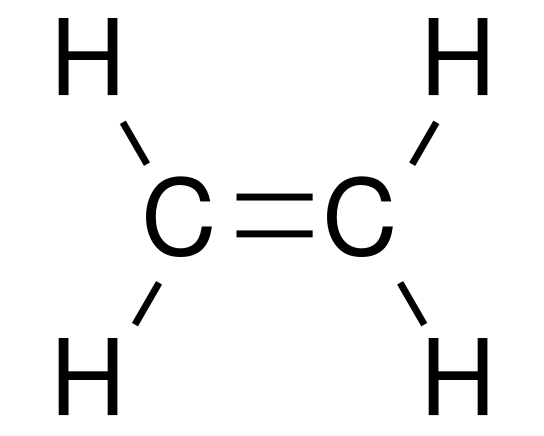
First made by this man in 1669, this molecule has kept chemists busy for quite some time. The term olefin has its origin story in the fact that when ethylene is combined with chlorine it produces Dutch oil (which made ethylene an oil-making gas—or as they called it: olefiant gas).
The simplest alkene is also the most widely produced organic compound in the world, with global production of roughly 200,000 KTA. About 60% of that becomes polyethylene (HDPE 28%, LLDPE 18%, LDPE 14%), 18% becomes ethylene oxide, 11% becomes EDC (that's Dutch oil), and 5% becomes ethylbenzene.
Almost all of it comes from steam cracking: ethane and propane in the US and Middle East, naphtha and gas oil in Europe and Asia. China also makes a good chunk from coal, by way of methanol-to-olefins. The main companies doing the cracking are your huge petrochemical companies like ExxonMobil, Dow Chemical, SABIC, Ineos, and many more.