Good morning. Today: Ukrainian drones reach Sibur's synthetic rubber complex in Tatarstan, Celanese starts up the China LCP plant it announced five years ago, and private equity buys what golf greens eat. I'm off next week, so the next edition comes December 4th. Happy Thanksgiving!
| WTI Crude | $89.53/bbl | -0.1% |
| Brent Crude | $92.94/bbl | +3.1% |
| HH Nat Gas | $3.10/MMBtu | +3.3% |
| MB Propane | $1.02/gal | -4.9% |
| 3:2:1 Crack | $31.09/bbl | -11.0% |
Ukraine's drones move down the chemical chain
Ukrainian drones set fire to Sibur's Nizhnekamskneftekhim complex in Tatarstan overnight on November 15, about 1,200 km from Ukrainian-held territory.
What do they make there?
Mostly synthetic rubbers, made from butadiene and isoprene it produces on site. It also makes plastics, ethylene and propylene oxide, and alpha olefins. The complex came to Sibur with the TAIF merger in 2021, and it made 3,000 KTA of products in 2025, helped by a new 600 KTA ethylene cracker that started up that January.
Zooming out:
Ukraine's General Staff claimed the strike, saying some of the site's synthetic rubbers bind the solid propellant in Iskander missiles. Ukraine's drones have hit 27 of Russia's 32 refineries, including TANECO next door, and lately they've moved down the chemical chain: EuroChem's Nevinnomyssk Azot at least five times since August 2025, Tatneft's synthetic rubber plant in Tolyatti on October 24, and Gazprom's Salavat complex two days after this one. Sibur's own Kstovo plant halted production after a strike in January 2025, which we covered at the time.
Celanese’s LCP is now for AI
Celanese started commissioning its new liquid crystal polymer (LCP) polymerization and compounding unit in Nanjing, China, aimed at high-speed connectors, CPU sockets and memory interfaces for AI data centers. It's the first place outside Shelby, North Carolina where Celanese polymerizes LCP.
What's LCP?
Celanese makes its main LCP by reacting 4-hydroxybenzoic acid with 6-hydroxy-2-naphthoic acid; the two link end to end into stiff, rod-like polyester chains. Those chains line up even when melted, like the molecules in a liquid crystal, so the plastic flows into thin, intricate parts, and it has the low dielectric loss that high-frequency electronics need.
What took so long?
Celanese announced this plant in January 2021: about 20 KTA of LCP, built in phases, first phase due online in 2024, pitched at 5G and EVs. About a year later, it agreed to buy most of DuPont's Mobility & Materials business for $11 billion, and its total debt went from $4.0 billion to $14.7 billion that year. Since then it has cut its dividend by about 95% and written off $2.7 billion of goodwill in the segment that took on the DuPont business. The Nanjing plant went onto a "delayed timeline" along the way.
Private equity buys into golf greens
Private equity firm Branford Castle bought Floratine Products Group, a Collierville, Tennessee company that formulates liquid nutrients for golf greens, sports fields and farms, for an undisclosed sum.
The details:
Floratine's main line of foliar sprays mixes urea, ammonium phosphate and potassium thiosulfate, and its micronutrient sprays are iron, manganese, zinc and copper sulfates. It adds amino acids, sugars, kelp and humic acids, which the industry sells as biostimulants. They're popular on golf courses: about half of US golf facilities use amino acids or biostimulants. Floratine also sells surfactants, a sulfosuccinate blend that pushes water into soil and a nonionic blend that holds it there.
Connecting the dots:
Floratine is a formulator that sells through distributors to golf course superintendents, and the average 18-hole course spends about $52,000 a year on fertilizer. Japanese trading house Marubeni is the largest investor in the fund that bought Floratine, and it also owns Helena, a $7 billion ag retailer that sells to golf courses and is headquartered in Collierville too.
The Reboiler:
- Rutgers chemists made hydrogen peroxide from oxygen with a metal-free organic electrocatalyst.
- Denka and SCG opened an 11 KTA acetylene black plant in Thailand, which we covered in December 2023.
- Birla Carbon opened a 120 KTA carbon black plant in Rayong, Thailand.
- Saint-Gobain is selling its Latin American water pipe business to Brazil's Tauá Partners.
- Lenzing is spending $31M on specialty lyocell fibers for nonwovens in Mobile, Alabama.
- Lummus is now licensing nine Versalis elastomer technologies.
- Borouge International opened a $110M+ line that triples its high-melt-strength polypropylene in Germany.
- Sila will supply Panasonic with silicon anode material in a deal that could top $1B.
- Technip Energies will design a Dutch plant that gasifies waste wood into green gas.
- Resonac is selling its graphite electrode business to Aurelius, weeks after agreeing to sell its adhesives to Sika.
- Topsoe will license its ammonia technology for Pupuk Indonesia's 825 KTA plant in West Papua.
- Veolia opened a 7 KTA plant in France that pulls cobalt, nickel and copper out of spent EV batteries.
- Satellite Chemical plans a $3.1B propane dehydrogenation and acrylic acid complex in Lianyungang, China.
- China's Guangzhou Futures Exchange starts trading lithium hydroxide futures on November 26.
- Chemists pushed platinum past the Sabatier limit by knocking carbon monoxide off it with blue light.
- Iron Path Capital bought Boulder Scientific, which makes metallocene catalysts for polyolefins.
- Dow got an NRC construction permit for four X-energy reactors at Seadrift, Texas, which we covered in September.
- Lithium Americas raised its Thacker Pass Phase 1 cost estimate 31% to $3.83B, which we covered last October.
- P&G is adding hops β-acids to Crest to break up the biofilms behind bleeding gums.
- Amyris is buying Oobli, which ferments sweet proteins like brazzein and thaumatin.
- Covestro wants to pyrolyze shredded car waste back into benzene, toluene and xylenes.
- Synthomer and BATF are forming a Chinese JV for coalescing agents and powder coating resins.
- Umicore is spending $500M to overhaul its Hoboken precious metals refinery, putting up to 350 jobs at risk.
MOTD: urea
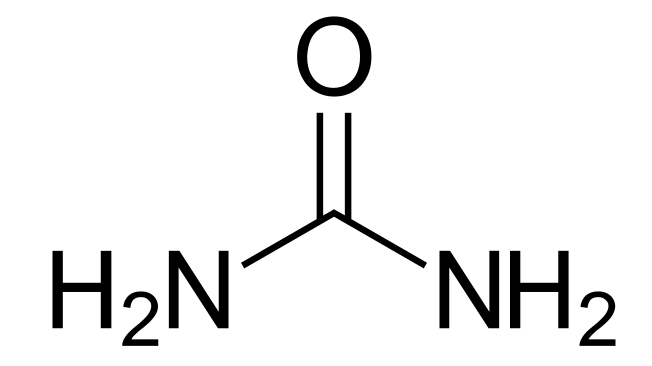
First isolated from urine by a Dutch scientist in 1727, urea made history a century later when Friedrich Wöhler made it from inorganic chemicals, showing an organic compound didn't need a living thing to make it. The world can now make about 180,000 KTA of it a year. Nearly all of it comes from reacting ammonia with carbon dioxide to make ammonium carbamate, which loses water to give urea, so it's mostly ammonia producers who make it (companies like Nutrien and Yara).
More than 90% of it goes into fertilizer, but it's also used to make urea-formaldehyde resins, melamine, diesel exhaust fluid (DEF) and livestock feed, and it shows up in adhesives, paints, laminates, paper and textiles.